Use case · Pilot
Sharing genetic and sensor data to improve animal production
One of Europe's largest cattle databases is linked with sensor providers through CEADS to improve herd management, breeding and animal health.
Challenge
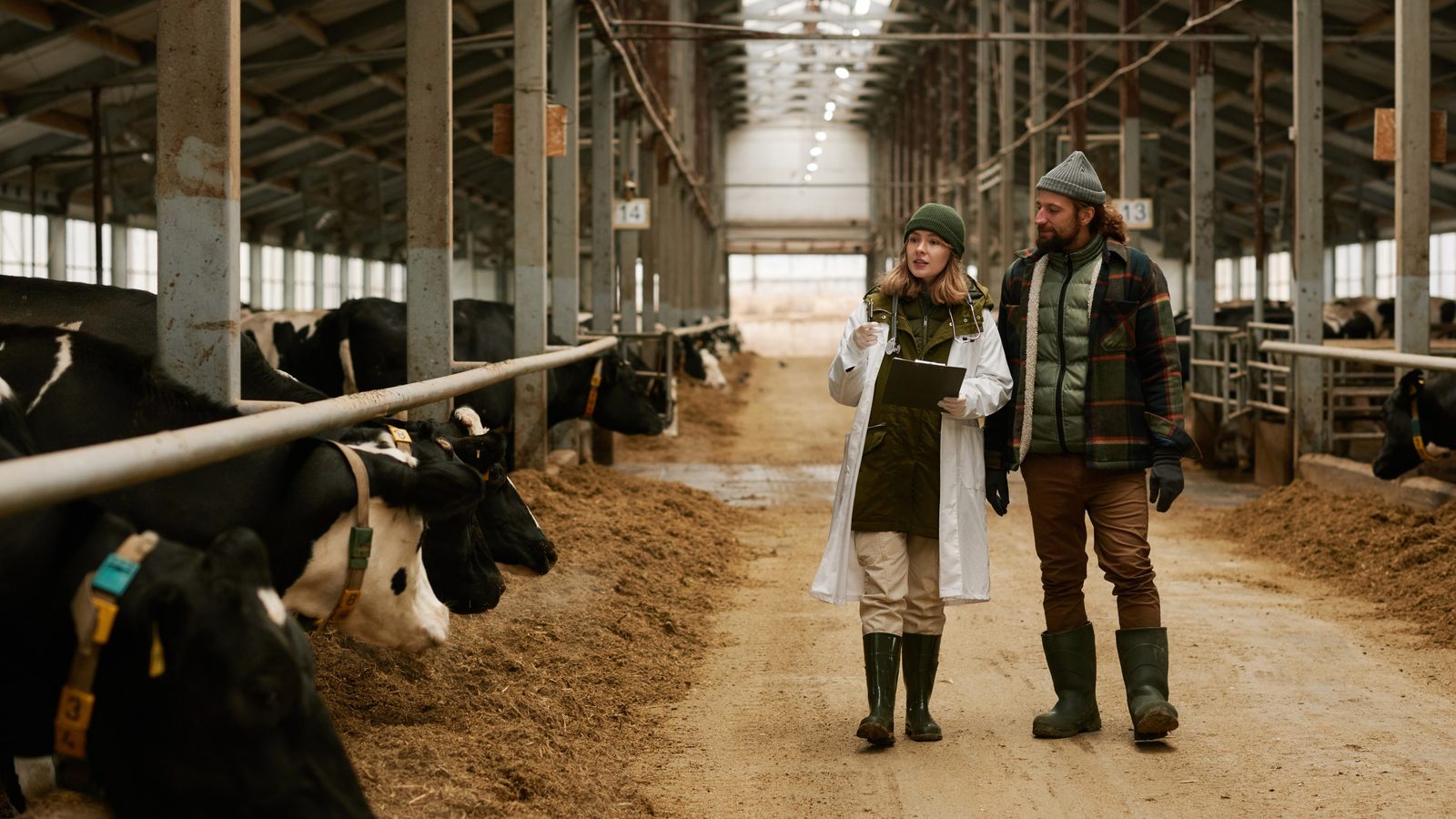
Genetic evaluation, milk and beef recording and on-farm sensor data live in separate systems. Breeders and farmers cannot easily combine identification, calving, insemination, pregnancy and health data in real time, and breeding value estimation stops at national borders.
Actors
Led by LKV Bayern with ZuchtData, ILVO and the Chambres d'agriculture France. Breeding organisations, milk recording organisations, sensor providers and dairy and beef farmers in Austria, Germany, France and Belgium.
Data
At least 25 datasets from 50,000 farms and two million cows in the RDV database: genetic evaluations, milk and beef recording, real-time rumination, reproductive and slaughterhouse data, exchanged with ICAR standards (ADE, ADIS/ADED) and the iDDEN platform.
How CEADS enables it
CEADS interconnects the genetic, recording and sensor datasets through standards-based connectors so data flow in real time between farm databases and service providers, under the conditions the breeders set, and breeding value estimation can expand across Europe.
Value created
Improved herd efficiency, productivity and farm profitability, interoperability through ICAR and iDDEN standards, more efficient livestock practices with lower input use and emissions, stronger collaboration among breeders, better animal welfare and higher consumer trust.